Wrong Label Material Selection: A Small Decision with Big Consequences
- Home
- Blog
Wrong Label Material Selection: A Small Decision with Big Consequences
Why Label Material Selection Matters
A label is often the quietest yet most critical component of a product. It doesn’t speak, but it builds trust on the shelf.
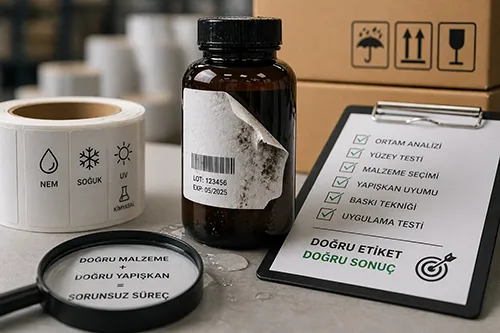
One of the most common issues we encounter in the field is incorrect label material selection. More importantly, this problem is often mistaken for a printing issue. In reality, it usually comes down to a more fundamental mistake: failing to analyze the conditions the label will be exposed to.
The result?
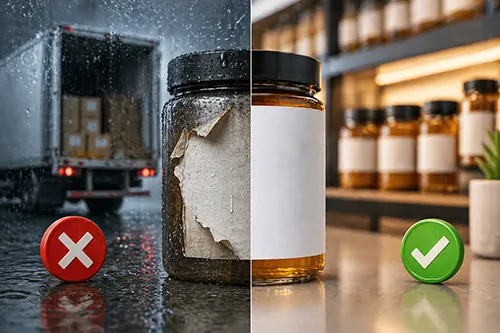
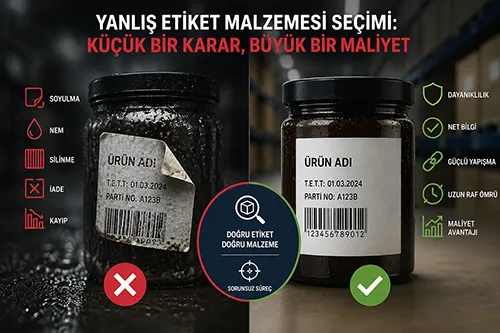
Peeling labels, fading information, and returned products.

The Real Cause of Label Failures
Wrong label material selection rarely stems from lack of technical knowledge. It’s usually driven by incorrect assumptions.
1. The “indoor use only” misconception
Products don’t just sit on shelves. They go through storage, transportation, and handling. Humidity, friction, temperature fluctuations…the label is exposed to all of it. Designing only for shelf conditions means addressing just 20% of the journey.
2. Ignoring surface type
Glass, plastic, metal, or cardboard… each surface behaves differently. A label that performs perfectly on one surface may fail within days on another.
3. The “paper label is enough” habit
Paper labels are cost-effective. But in humid environments, cold chain logistics, or outdoor exposure, they quickly become a liability.
Hidden Costs of Wrong Label Choices
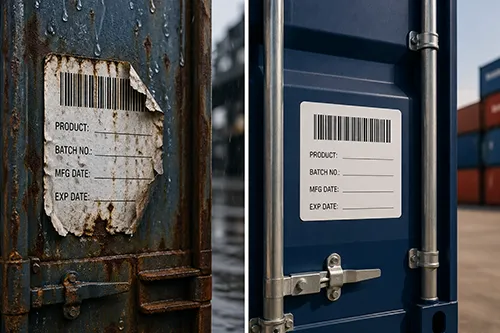
At first glance, this issue may seem minor—“the label came off.” But the real impact is much broader:
• Relabeling costs increase
• Product shipments are delayed
• Shelf life is compromised
• Brand credibility is damaged
• In sectors like food and chemicals, regulatory risks emerge
In short, a small initial saving often turns into a significantly higher total cost.
How to Choose the Right Label Material
Selecting the right label material is not about the product alone— it’s about the entire lifecycle the product goes through.
1. Analyze the environment
Ask the right questions:
• Is there humidity exposure?
• Are there temperature fluctuations?
• Will the product be exposed to outdoor conditions?
• Is there any chemical contact?
2. Test surface–adhesive compatibility
What works in theory may fail in practice. Small tests prevent costly mistakes.
3. Align printing technique with material
Flexo, digital, or other methods—each performs differently depending on the material. Technical alignment is as critical as design.
4. Avoid one-size-fits-all solutions
Every product has a unique journey. Your label should reflect that.
The Sancak Etiket Approach
One of the most common misconceptions we see is this:
Labels are treated as simple printed items.
In reality, a label is an integral part of the product’s journey—from production to shelf.
At Sancak Etiket, we approach this differently:
• We start by analyzing the use case
• Then we define the optimal material + adhesive combination
• Finally, we optimize printing and application
We don’t just produce labels.
We design systems that work without failure.
Conclusion
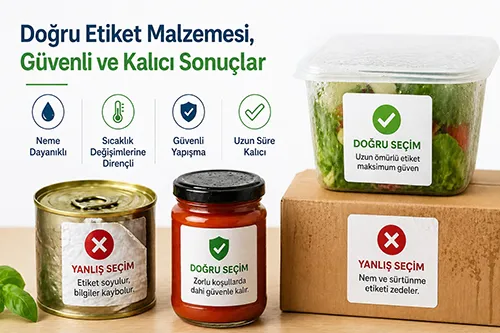
Choosing the wrong label material may seem like a minor technical detail.
But its impact directly affects operations, costs, and brand perception.
The right choice often goes unnoticed—because it simply works.
And that, ultimately, is the true success of a well-designed label.
00+
Workers
00+
Projects
00+
Happy Customers
00+
Continent